
In the modern architectural landscape, sustainability is no longer an optional 'extra', it is a core requirement. Designers, architects, and facility managers across India are increasingly tasked with achieving stringent green building certifications like LEED, WELL, and IGBC. However, a common friction point remains: how do you balance high-performance acoustics with environmental integrity?
For decades, the industry relied on traditional materials like fiberglass, mineral wool, and foam. While effective at dampening sound, these materials often come with a heavy environmental price tag. Enter PET (Polyethylene Terephthalate) Acoustic Panels.
At SISU India, we have seen a massive shift in how projects are specified. It is not just about noise reduction anymore; it is about the lifecycle of the product. This guide breaks down why PET panels are outperforming traditional materials in the race for sustainability and why they might be the definitive answer for your next project.
The Hidden Environmental Cost of Traditional Materials
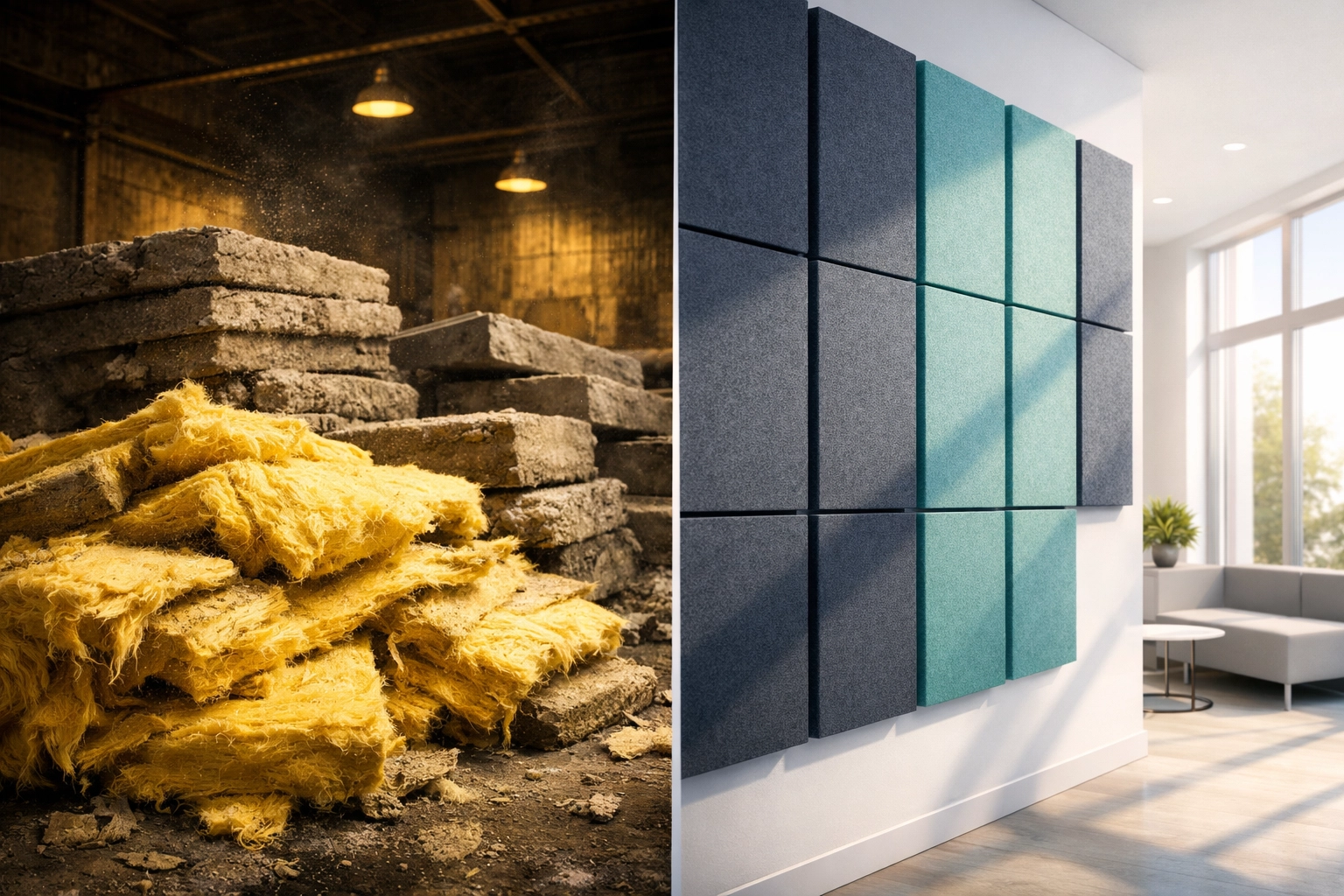
To understand the value of PET, we must first look at the 'incumbents.' Traditional acoustic solutions typically involve:
- Fiberglass: Made from molten glass spun into fibers. While effective, the manufacturing process is incredibly energy-intensive. Furthermore, fiberglass often requires chemical binders that can offgas harmful Volatile Organic Compounds (VOCs).
- Mineral Wool: Derived from stone or industrial slag. Like fiberglass, it requires high-heat production and is often difficult to recycle at the end of its life cycle, frequently ending up in landfills.
- Open-Cell Foams: Often petroleum-based, these materials are highly flammable (unless treated with heavy chemicals) and degrade over time, crumbling into non-biodegradable micro-dust.
The problem is clear: these materials solve an acoustic pain point but create an environmental one. They represent a 'linear' economy, take, make, and dispose.
1. Material Sourcing: From Waste to Wonder
The most significant sustainability advantage of PET acoustic panels lies in their origin. Unlike traditional materials that require the extraction of virgin raw materials, PET panels are manufactured using recycled plastic bottles (post-consumer waste).
By choosing Acoustical PET Panels, you are actively participating in the diversion of plastic from landfills and oceans.
- The SISU Advantage: Many of our PET products contain upwards of 60% recycled content.
- The Impact: Every square meter of PET panel represents dozens of plastic bottles that have been repurposed into a functional, long-lasting architectural asset.
2. Energy and Water Efficiency: A Leaner Footprint
Sustainability is measured not just by what a product is made of, but how it is made. Research indicates that the production of PET acoustic panels is significantly more efficient than its predecessors.
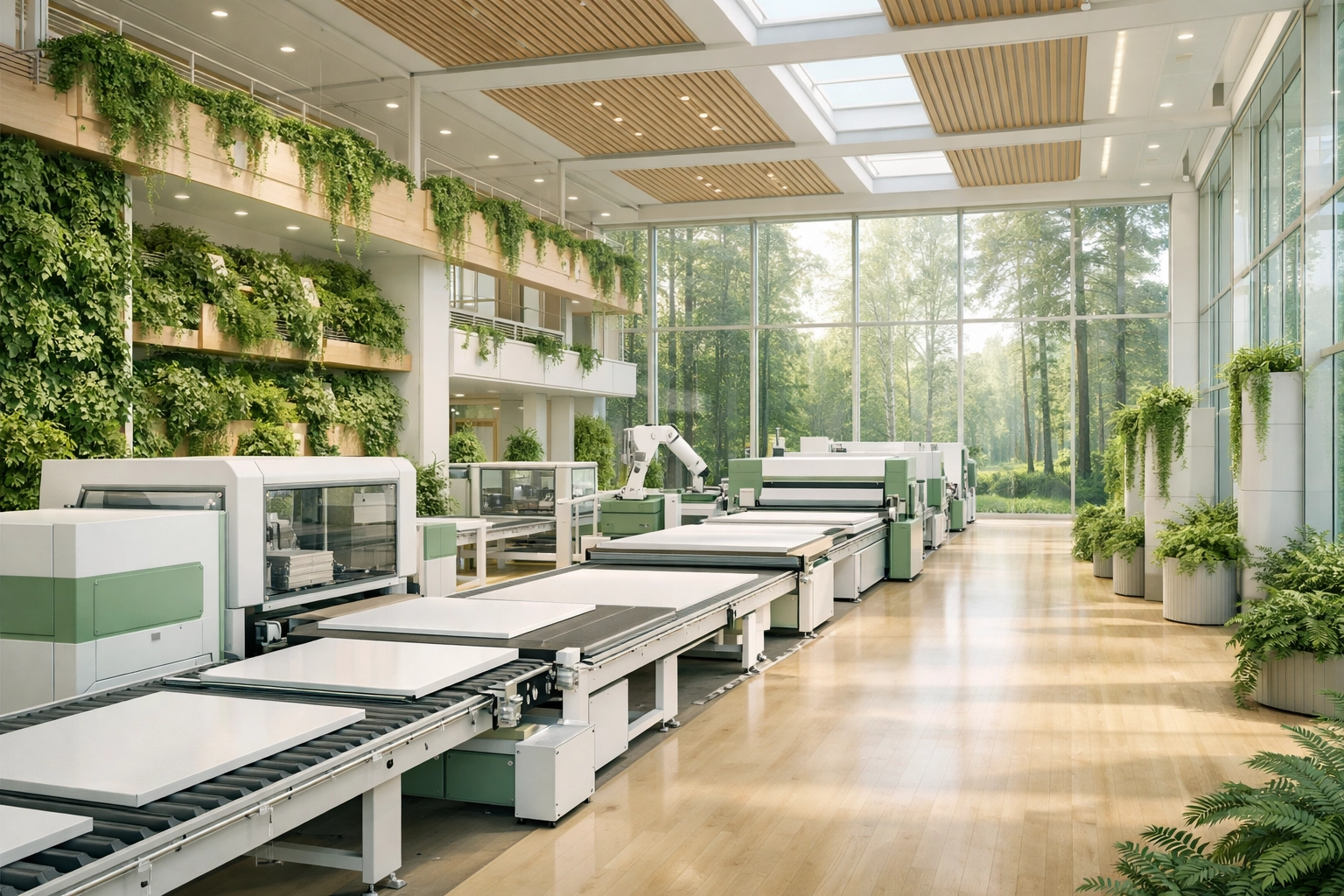
- Energy Savings: Manufacturing PET panels requires up to 70% less energy compared to traditional fiberglass or mineral wool. Because the process involves felted fibers rather than high-heat melting of minerals or glass, the carbon footprint of the factory stage is drastically lower.
- Water Conservation: The recycling process for PET consumes approximately 60% less water than the production of virgin materials. In a water-stressed region like India, these savings are a critical component of a project's overall sustainability audit.

3. Indoor Air Quality: Breathing Easier
A sustainable building must also be a healthy building. Traditional acoustic materials are notorious for skin irritation during installation and the release of VOCs over time.
PET acoustic panels are inherently low-VOC. They do not contain formaldehyde or other toxic binders found in many traditional fiberglass boards.
- Non-Allergenic: PET is chemically stable and does not shed irritating fibers.
- Safe for Schools and Healthcare: Because they are 'breathable' and non-toxic, PET panels are the preferred choice for environments where air quality is paramount.
For more on how these panels enhance commercial spaces, explore our latest update on silence and style.
4. Durability and Lifecycle Impact
A product that needs to be replaced every five years is not sustainable, regardless of how 'green' its materials are. Traditional foam and low-density mineral wool can sag, crumble, or lose their shape over time.
PET panels are exceptionally durable. They are:
- Impact Resistant: Unlike fiberglass, which can dent or shatter under pressure, PET is flexible and resilient. It is perfect for high-traffic areas like corridors and gyms.
- Moisture Resistant: PET does not rot or promote the growth of mold and mildew, making it a superior choice compared to wood-based or traditional fiber solutions in humid climates.
- Tackable: In office settings, PET panels can double as pinboards without losing their acoustic integrity.
5. The Circular Economy: Full Recyclability
The 'End-of-Life' (EoL) phase is where traditional materials fail most dramatically. Once fiberglass or mineral wool is contaminated with dust or adhesives, it is almost impossible to recycle.
PET, however, is a champion of the circular economy. Uncontaminated PET panels are 100% recyclable. At the end of a building's life or a commercial lease, these panels can be shredded and processed back into new PET fibers. This 'cradle-to-cradle' potential ensures that your project does not contribute to the global waste crisis.
Aesthetic Versatility: Sustainability Without Sacrifice
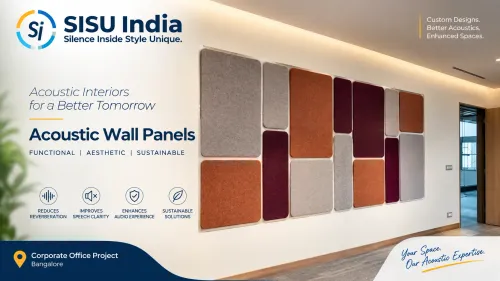
There is a common misconception that sustainable materials are 'boring' or aesthetically limited. SISU India’s PET range proves the opposite. Sustainability now comes in every color and texture imaginable.
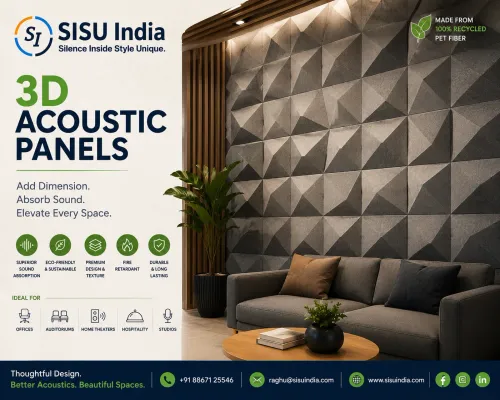
- 3D Design: Our 3D Acoustic Panels offer geometric depth that was previously impossible with traditional flat boards.
- Precision Cutting: Using CNC technology, we can create Acoustical V-Groove Panels that mimic the look of premium timber slats without the environmental cost of deforestation.
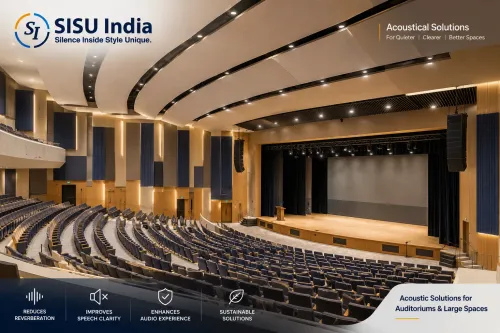
- Large Scale Solutions: For expansive spaces, Acoustical PET Large Panels provide seamless coverage with minimal waste.
Technical Performance: The NRC Reality
Can a recycled plastic panel actually absorb sound as well as thick mineral wool? The answer is a resounding yes.
PET panels are engineered with a specific fiber density that traps sound waves effectively. Most high-quality PET panels offer a Noise Reduction Coefficient (NRC) of 0.85 or higher when installed with an air gap. This makes them not just a 'green' alternative, but a high-performance acoustic tool.

Summary Comparison Table
Why Bangalore Architects Choose SISU India
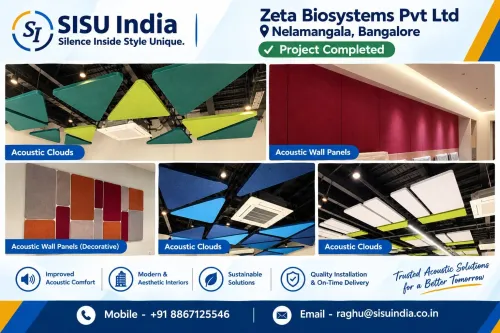
In a fast-growing hub like Bangalore, the demand for sustainable, high-performance building materials is at an all-time high. SISU India provides localized expertise and a supply chain that understands the nuances of Indian commercial real estate. Whether you are looking for Acoustic Ceiling Clouds for a tech startup or Mass Loaded Vinyl for industrial soundproofing, we bridge the gap between technical specs and environmental goals.
Applications Across Sectors:
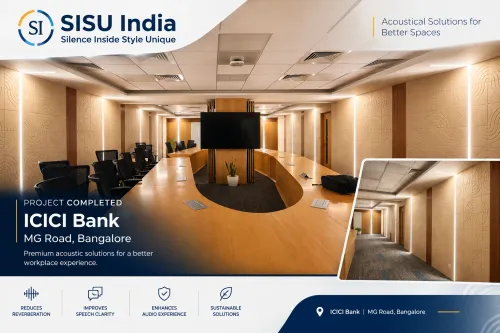
- 🏢 Commercial Offices: Creating quiet zones for deep work while meeting ESG targets.
- 🎓 Education: Enhancing speech intelligibility in classrooms using non-toxic materials.
- 🏨 Hospitality: Designing serene guest experiences with Acoustic Clouds.
- 🏠 Residential: High-end home theaters that don't compromise on air quality.
Final Thoughts: The Future is PET
Choosing PET acoustic panels is not just an aesthetic choice; it is a commitment to a more sustainable future. By reducing energy consumption, diverting waste, and ensuring healthy indoor air, PET has firmly established itself as the superior choice for any project aiming for sustainability.
Ready to upgrade your project's acoustic and environmental profile?
At SISU India, we provide the technical guidance and premium materials you need to silence the noise and support the planet.
📞 Contact us today for a consultation:
Phone: +91 88671 25546
Website: www.sisuindia.com
Location: Serving Bangalore, Karnataka, and projects across India.
Search Intent & Keywords:
PET acoustic panels Bangalore, sustainable building materials India, recycled acoustic panels, NRC rating PET panels, acoustic solutions for LEED certification, SISU India soundproofing, acoustic PET panels vs fiberglass.
Keywords