
Acoustic Baffle Ceiling vs. Cloud Ceiling: Which Is Better For Your Open-Plan Office?
The modern open-plan office was designed to foster collaboration, but it often delivers a different result: acoustic chaos. In large, shared workspaces, sound doesn't just travel; it multiplies. Hard surfaces: concrete floors, glass partitions, and exposed ceilings: reflect sound waves, leading to high reverberation times that kill focus and elevate stress.
For architects and facility managers in India, the challenge is clear. You need a solution that is not just functional, but visually integrated into the design language of the workspace. This brings us to the ultimate debate in overhead sound management: the acoustic baffle ceiling versus the acoustic cloud ceiling.
Both systems utilize high-performance materials to mitigate noise, yet they function differently and suit different architectural needs. At SISU India, we believe that understanding the technical nuances between these two is the key to creating a productive environment.
The Problem: The High Cost of 'Loud' Design
In the context of office acoustics India, the trend toward 'industrial chic' has left many employees struggling to hear themselves think. When sound waves hit hard surfaces, they bounce back into the room, creating an echo chamber effect. This reduces speech intelligibility, making it difficult to hold clear conversations or focus on complex tasks.
The solution is not to block sound, but to absorb it. Suspended acoustic systems are the most effective way to treat these environments because they target the largest reflective surface in the room: the ceiling.
Acoustic Baffle Ceilings: The Vertical Powerhouse
An acoustic baffle ceiling consists of sound-absorbing panels suspended vertically from the structural deck. They are typically arranged in rows or patterns, creating a rhythmic, linear aesthetic that complements modern industrial designs.
Why Baffles Work
Because baffles hang vertically, they expose both sides of the panel to the environment. This significantly increases the total surface area available for sound absorption without occupying the entire ceiling footprint.
Noise Reduction: Baffles are exceptionally effective at capturing lateral sound waves: the kind that travel across a room from one workstation to another.
Airflow and Services: One of the primary advantages of a baffle system is that it does not create a solid barrier. This allows for excellent air circulation from HVAC systems and easy access to fire sprinklers and lighting fixtures.
NRC Ratings: Most high-quality acoustical PET panels used in baffles offer an NRC (Noise Reduction Coefficient) between 0.60 and 0.85.
Ideal Applications for Baffles
Baffles excel in high-traffic, high-ceiling areas. They are not just an acoustic treatment, but a geometric design element that can define paths or zones within a large floor plate.
Open-plan workstations
Corridors and circulation paths
Lobbies and cafeterias
Acoustic Cloud Ceilings: The Horizontal Sculptor
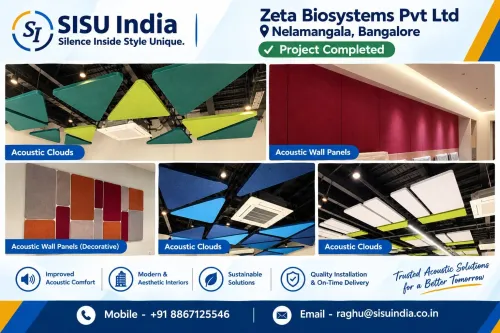
An acoustic cloud ceiling consists of panels suspended horizontally, 'floating' below the structural ceiling. These can be geometric shapes: circles, hexagons, or squares: or large-format rectangular panels.
Why Clouds Work
Clouds are the heavy hitters of sound absorption. Because they are suspended away from the ceiling, they benefit from 'dual-sided absorption.' Sound waves are absorbed as they travel upward, and any sound that manages to pass through and hit the structural ceiling is absorbed again on its way back down.
Superior NRC: Clouds often achieve NRC ratings of 0.85 to 1.0. This makes them the definitive answer for spaces where speech clarity is non-negotiable.
Focal Points: Clouds act as visual anchors. They can be used to 'lower' the ceiling height over a specific area, creating a more intimate, human-scale feel in a cavernous room.
Integration: Our acoustic cloud ceiling systems allow for the seamless integration of recessed lighting, turning a functional acoustic tool into a primary light source.
Ideal Applications for Clouds
Clouds are best suited for zones where intense communication or deep focus occurs.
Conference rooms and boardrooms
Reception desks
Collaborative 'huddle' spaces
Direct Comparison: Baffles vs. Clouds
To help you decide which system fits your project, let’s break down the key performance metrics.
Aesthetics: Minimalism vs. Impact
Baffles provide a sleek, minimalist look that preserves the 'openness' of the deck. They are the go-to for designers who want the ceiling to look busy but organized. Clouds, on the other hand, are high-impact. They are used when the ceiling needs to make a statement or define a 'room within a room.'
Installation Complexity
Installation for both systems is relatively straightforward, but baffles generally offer more flexibility. Because they are installed in rows, they can be easily moved to accommodate new ductwork or lighting. Clouds require a more rigid layout, as their horizontal placement can sometimes interfere with other overhead services if not planned correctly.
The Hybrid Approach: Why Not Both?
In many high-end office acoustics India projects, the most successful strategy is a hybrid one. You don't have to choose just one system; instead, you can deploy each where it performs best.
Imagine a large tech office in Bangalore. The main workstation area uses rows of baffles to keep the space feeling airy while cutting down the hum of chatter. Meanwhile, the glass-walled conference rooms and the central 'town hall' area feature large, circular acoustic clouds to ensure that every word spoken in a meeting is crystal clear.
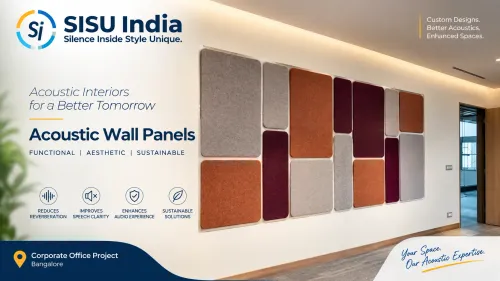
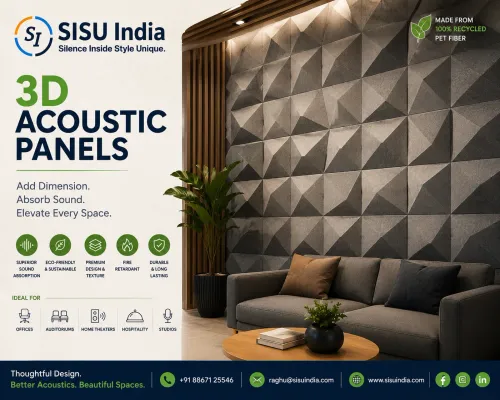
Using a mix of 3D acoustic panels on the walls and a combination of baffles and clouds on the ceiling creates a comprehensive acoustic envelope.
Performance in the Indian Climate
India’s commercial real estate often faces unique challenges. High humidity in coastal cities and the heavy use of air conditioning mean that materials must be durable and resistant to sagging.
SISU India’s PET-based solutions are not just sustainable, but incredibly resilient. Unlike traditional fiberglass or mineral wool tiles, our PET panels are moisture-resistant and maintain their shape over time. This is critical for long-term facility management, ensuring that your investment looks as good in year five as it did on day one.
Case Study Focus: Real-World Results
We have seen these principles in action across various sectors. For instance, at the IDFC Hubli project, the focus was on creating a professional environment that could handle high foot traffic without becoming noisy. Similarly, our work at Jane's Bangalore showcased how acoustic treatments can blend seamlessly into a modern corporate identity.
Technical Considerations for Architects
When specifying these systems, keep the following technical points in mind:
Spacing Matters: For baffles, the distance between each row determines the acoustic performance. Closer spacing increases the NRC but reduces airflow.
Suspension Height: The 'air gap' between the structural ceiling and the acoustic element is vital. A larger gap usually improves low-frequency absorption.
Weight: Modern PET panels are lightweight, reducing the load on the building structure compared to heavy gypsum or wood-wool alternatives.
Choosing the Right Solution for Your Project
So, which is better for your office?
Choose Baffles if: You have a lot of overhead services (pipes, ducts), you want to maintain a sense of height, or you are treating a large, open area with consistent noise levels.
Choose Clouds if: You need maximum sound absorption over specific zones, you want to integrate lighting into the acoustic design, or you are treating a space with lower ceilings where vertical baffles might feel intrusive.
At SISU India, we specialize in providing tailored acoustical solutions that meet the specific needs of the Indian market. From Mass Loaded Vinyl for soundproofing to high-aesthetic PET panels, we help you build spaces that sound as good as they look.
Elevate your workspace acoustics today.
For expert consultation on your next project, contact our team:
📞 Phone: +91 8867125546
🌐 Website: www.sisuindia.com
📍 Visit our Products Page: Explore our Range
SISU India: Silence Meets Style.
The modern open-plan office was designed to foster collaboration, but it often delivers a different result: acoustic chaos. In large, shared workspaces, sound doesn't just travel; it multiplies. Hard surfaces: concrete floors, glass partitions, and exposed ceilings: reflect sound waves, leading to high reverberation times that kill focus and elevate stress.
For architects and facility managers in India, the challenge is clear. You need a solution that is not just functional, but visually integrated into the design language of the workspace. This brings us to the ultimate debate in overhead sound management: the acoustic baffle ceiling versus the acoustic cloud ceiling.
Both systems utilize high-performance materials to mitigate noise, yet they function differently and suit different architectural needs. At SISU India, we believe that understanding the technical nuances between these two is the key to creating a productive environment.
The Problem: The High Cost of 'Loud' Design
In the context of office acoustics India, the trend toward 'industrial chic' has left many employees struggling to hear themselves think. When sound waves hit hard surfaces, they bounce back into the room, creating an echo chamber effect. This reduces speech intelligibility, making it difficult to hold clear conversations or focus on complex tasks.
The solution is not to block sound, but to absorb it. Suspended acoustic systems are the most effective way to treat these environments because they target the largest reflective surface in the room: the ceiling.
Acoustic Baffle Ceilings: The Vertical Powerhouse
An acoustic baffle ceiling consists of sound-absorbing panels suspended vertically from the structural deck. They are typically arranged in rows or patterns, creating a rhythmic, linear aesthetic that complements modern industrial designs.
Why Baffles Work
Because baffles hang vertically, they expose both sides of the panel to the environment. This significantly increases the total surface area available for sound absorption without occupying the entire ceiling footprint.
Noise Reduction: Baffles are exceptionally effective at capturing lateral sound waves: the kind that travel across a room from one workstation to another.
Airflow and Services: One of the primary advantages of a baffle system is that it does not create a solid barrier. This allows for excellent air circulation from HVAC systems and easy access to fire sprinklers and lighting fixtures.
NRC Ratings: Most high-quality acoustical PET panels used in baffles offer an NRC (Noise Reduction Coefficient) between 0.60 and 0.85.
Ideal Applications for Baffles
Baffles excel in high-traffic, high-ceiling areas. They are not just an acoustic treatment, but a geometric design element that can define paths or zones within a large floor plate.
Open-plan workstations
Corridors and circulation paths
Lobbies and cafeterias
Acoustic Cloud Ceilings: The Horizontal Sculptor
An acoustic cloud ceiling consists of panels suspended horizontally, 'floating' below the structural ceiling. These can be geometric shapes: circles, hexagons, or squares: or large-format rectangular panels.
Why Clouds Work
Clouds are the heavy hitters of sound absorption. Because they are suspended away from the ceiling, they benefit from 'dual-sided absorption.' Sound waves are absorbed as they travel upward, and any sound that manages to pass through and hit the structural ceiling is absorbed again on its way back down.
Superior NRC: Clouds often achieve NRC ratings of 0.85 to 1.0. This makes them the definitive answer for spaces where speech clarity is non-negotiable.
Focal Points: Clouds act as visual anchors. They can be used to 'lower' the ceiling height over a specific area, creating a more intimate, human-scale feel in a cavernous room.
Integration: Our acoustic cloud ceiling systems allow for the seamless integration of recessed lighting, turning a functional acoustic tool into a primary light source.
Ideal Applications for Clouds
Clouds are best suited for zones where intense communication or deep focus occurs.
Conference rooms and boardrooms
Reception desks
Collaborative 'huddle' spaces
Direct Comparison: Baffles vs. Clouds
To help you decide which system fits your project, let’s break down the key performance metrics.
Aesthetics: Minimalism vs. Impact
Baffles provide a sleek, minimalist look that preserves the 'openness' of the deck. They are the go-to for designers who want the ceiling to look busy but organized. Clouds, on the other hand, are high-impact. They are used when the ceiling needs to make a statement or define a 'room within a room.'
Installation Complexity
Installation for both systems is relatively straightforward, but baffles generally offer more flexibility. Because they are installed in rows, they can be easily moved to accommodate new ductwork or lighting. Clouds require a more rigid layout, as their horizontal placement can sometimes interfere with other overhead services if not planned correctly.
The Hybrid Approach: Why Not Both?
In many high-end office acoustics India projects, the most successful strategy is a hybrid one. You don't have to choose just one system; instead, you can deploy each where it performs best.
Imagine a large tech office in Bangalore. The main workstation area uses rows of baffles to keep the space feeling airy while cutting down the hum of chatter. Meanwhile, the glass-walled conference rooms and the central 'town hall' area feature large, circular acoustic clouds to ensure that every word spoken in a meeting is crystal clear.
Using a mix of 3D acoustic panels on the walls and a combination of baffles and clouds on the ceiling creates a comprehensive acoustic envelope.
Performance in the Indian Climate
India’s commercial real estate often faces unique challenges. High humidity in coastal cities and the heavy use of air conditioning mean that materials must be durable and resistant to sagging.
SISU India’s PET-based solutions are not just sustainable, but incredibly resilient. Unlike traditional fiberglass or mineral wool tiles, our PET panels are moisture-resistant and maintain their shape over time. This is critical for long-term facility management, ensuring that your investment looks as good in year five as it did on day one.
Case Study Focus: Real-World Results
We have seen these principles in action across various sectors. For instance, at the IDFC Hubli project, the focus was on creating a professional environment that could handle high foot traffic without becoming noisy. Similarly, our work at Jane's Bangalore showcased how acoustic treatments can blend seamlessly into a modern corporate identity.
Technical Considerations for Architects
When specifying these systems, keep the following technical points in mind:
Spacing Matters: For baffles, the distance between each row determines the acoustic performance. Closer spacing increases the NRC but reduces airflow.
Suspension Height: The 'air gap' between the structural ceiling and the acoustic element is vital. A larger gap usually improves low-frequency absorption.
Weight: Modern PET panels are lightweight, reducing the load on the building structure compared to heavy gypsum or wood-wool alternatives.
Choosing the Right Solution for Your Project
So, which is better for your office?
Choose Baffles if: You have a lot of overhead services (pipes, ducts), you want to maintain a sense of height, or you are treating a large, open area with consistent noise levels.
Choose Clouds if: You need maximum sound absorption over specific zones, you want to integrate lighting into the acoustic design, or you are treating a space with lower ceilings where vertical baffles might feel intrusive.
At SISU India, we specialize in providing tailored acoustical solutions that meet the specific needs of the Indian market. From Mass Loaded Vinyl for soundproofing to high-aesthetic PET panels, we help you build spaces that sound as good as they look.
Elevate your workspace acoustics today.
For expert consultation on your next project, contact our team:
📞 Phone: +91 8867125546
🌐 Website: www.sisuindia.com
📍 Visit our Products Page: Explore our Range
SISU India: Silence Meets Style.
Keywords