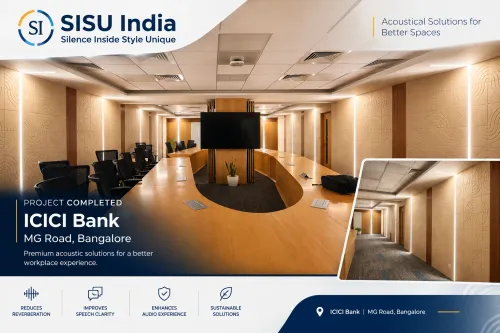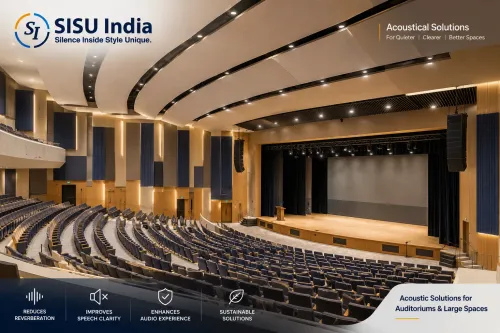

In the modern corporate landscape, the conference room is the nerve center of decision-making. However, many facility managers and architects are discovering a frustrating reality: beautiful glass-walled boardrooms often double as echo chambers, and confidential 'private' meetings are being overheard in the hallway.
When soundproofing for conference rooms is treated as an afterthought or a DIY project, the results are rarely quiet. At SISU India, we see the same acoustic errors repeated across high-end office fit-outs in Bangalore and beyond. Achieving acoustic excellence isn't just about sticking foam on a wall; it’s a science of mass, absorption, and sealing.
If your meetings are plagued by poor speech clarity or privacy leaks, you are likely making one of these seven common mistakes. Here is how to identify them: and the professional solutions to fix them.
1. Confusing Sound 'Absorption' with 'Soundproofing'
The most frequent mistake in office design is using these two terms interchangeably.
- Sound Absorption reduces echo and reverberation inside the room (improving audio quality for Zoom calls).
- Soundproofing (Insulation) prevents noise from entering or leaving the room (ensuring privacy).
The Mistake: Installing thin foam or standard fabric panels and expecting them to block the sound of a loud argument from traveling to the next office.
The Fix: You need a multi-layered approach. For privacy, you must add mass to the walls. We recommend using Mass Loaded Vinyl (MLV) membranes, which act as a high-density barrier against noise transmission. Once the room is sealed, use noise reduction panels for walls to manage the internal echo.
2. The 'Glass Box' Trap: Ignoring Reflective Surfaces
Modern office aesthetics favor glass partitions and polished concrete floors. While visually stunning, these are 'acoustically hostile' materials. They reflect sound waves perfectly, leading to high reverberation times that make speech unintelligible.
The Mistake: Surrounding a conference table with four glass walls and wondering why the speakerphone sounds like it's underwater.
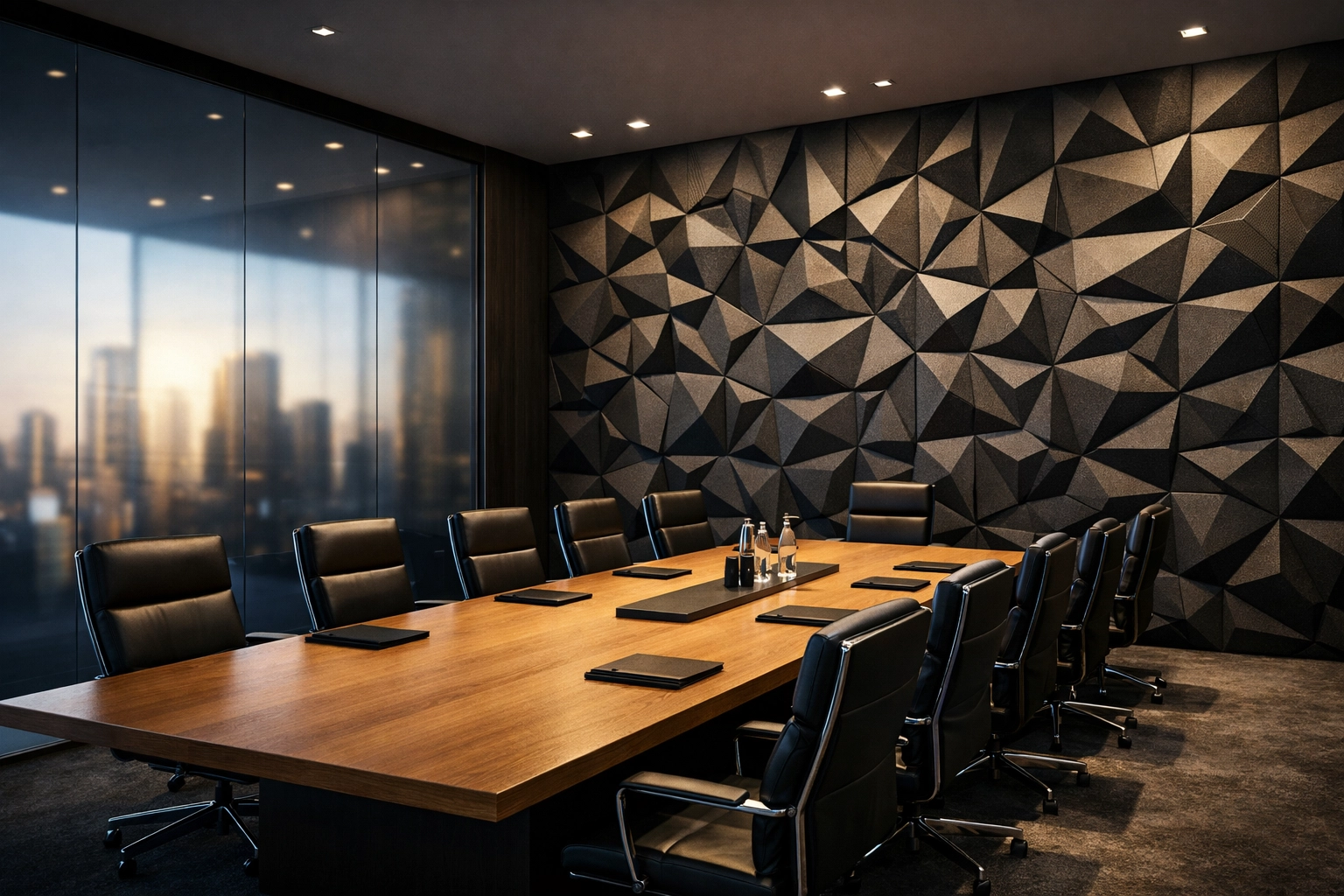
The Fix: You don't have to sacrifice the glass aesthetic, but you must balance it. Introduce acoustical PET panels on the remaining solid surfaces. These panels are engineered to trap sound waves rather than bounce them back. For a premium look that fits a boardroom, consider 3D acoustic panels, which break up standing waves through geometric diffusion while providing superior absorption.
3. Neglecting the 'Flanking Paths' (Ceilings and Floors)
Sound behaves like water; it finds the path of least resistance. Even if your walls are perfectly insulated, noise can 'flank' or bypass the wall by traveling through the ceiling void or under the floorboards.
The Mistake: Building a soundproof wall but stopping it at the height of the suspended grid ceiling. This leaves a massive air gap above the tiles where sound can easily spill into the next room.
The Fix:
- Slab-to-Slab Walls: Ensure your partitions extend all the way to the structural concrete slab above.
- Ceiling Treatments: If a full wall extension isn't possible, use acoustic cloud ceilings or baffles to catch sound before it enters the plenum.
- Barrier Mats: Apply a heavy-duty noise control membrane to the ceiling structure to block vertical sound travel.
4. Poor Door Sealing and Hardware Selection
The door is almost always the weakest link in any conference room’s acoustic envelope. A standard office door often has a 1/2-inch gap at the bottom, which is enough to let out 30-50% of the room's acoustic energy.
The Mistake: Investing in high-STC (Sound Transmission Class) walls but installing a hollow-core door or a glass sliding door with no seals.
The Fix:
- Solid Core: Always use solid-core wood or specialized acoustic metal doors.
- Automatic Drop Seals: Install a seal at the bottom of the door that 'drops' when the door closes to plug the gap.
- Acoustic Gaskets: Line the door frame with neoprene gaskets to ensure an airtight seal.
5. Overlooking Air Leaks and Electrical Outlets
In the world of acoustics, if air can pass through, sound can pass through. Small gaps around electrical outlets, HVAC vents, and cable trays are major contributors to noise leaks.
The Mistake: Back-to-back electrical outlets in a shared wall. This essentially creates a 'hole' through your sound barrier.
The Fix: Stagger your outlets so they aren't directly opposite each other. Use acoustic putty pads to wrap the back of electrical boxes. For HVAC ducts, ensure you use internal acoustic lining or 'sound attenuators' to prevent the 'speaking tube' effect where conversations travel through the ventilation system.
6. Using 'Egg Carton' Solutions (Low-Quality Materials)
Budget-conscious facility managers often turn to cheap acoustic foam or DIY 'hacks' like thick curtains, hoping to solve complex acoustic problems.
The Mistake: Using flammable, low-density packing foam that provides zero sound-blocking capability and minimal high-frequency absorption.
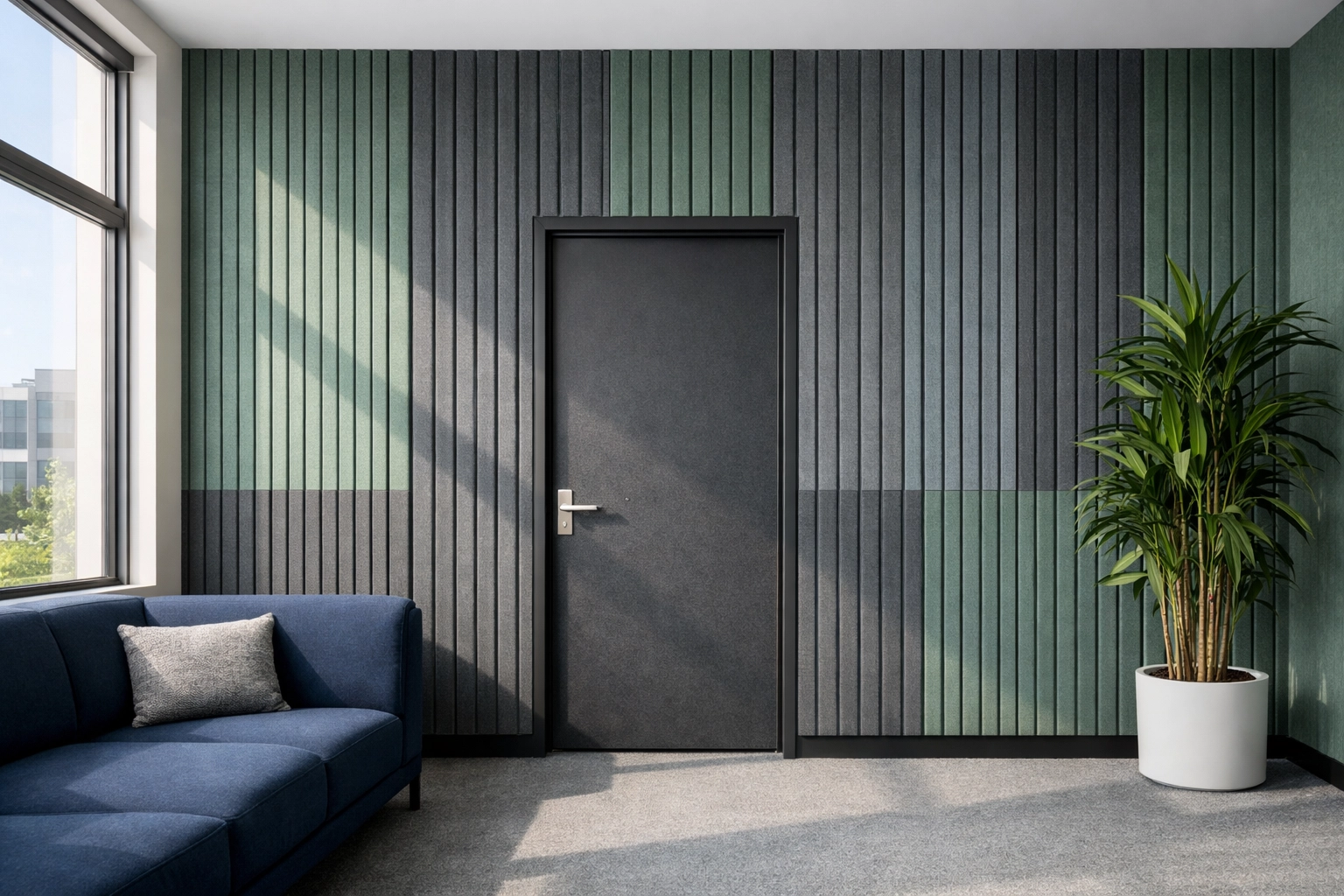
The Fix: Invest in professional-grade materials that are tested for performance and fire safety. For instance, SISU SoundTone Acoustic PET Panels offer a high NRC (Noise Reduction Coefficient) and are made from sustainable, recycled materials. They are not just functional; they are architectural elements. Whether you choose V-Groove panels for a linear look or U-Groove panels for texture, the quality of the material dictates the quality of the silence.
7. Failing to Account for the 'Human' Factor
Soundproofing isn't just about decibels; it’s about psychology. A room that is too quiet can feel oppressive (the 'dead' room effect), while a room with just the right amount of acoustic treatment feels 'private' and 'secure.'
The Mistake: Treating the whole room with the same material, resulting in a space that feels unnatural or muffled.
The Fix: Use a strategic mix of absorption and diffusion. Place noise reduction panels for walls at 'ear level' where people are seated. Use PET large panels on the primary reflection wall (usually the wall opposite the main speaker or the screen) to prevent 'slap back' echo during video conferences.
Summary of Solutions for Facility Managers & Architects
Why SISU India?
Acoustics is a precision game. A 1% gap in your soundproofing effort can result in a 50% loss in performance. As a leading MLV supplier in Bangalore, SISU India provides more than just materials; we provide engineered solutions.
Whether you are designing a new corporate HQ or retrofitting an existing meeting space, our range of acoustical PET large panels and sound deadening membranes are designed to meet international standards for performance and sustainability.
Don’t let poor acoustics undermine your professional image. Stop the echo, secure your privacy, and create a workspace where ideas can be heard clearly.
Ready to silence the noise?
Our experts at SISU India are ready to help you navigate your next acoustic project with precision and style. 🏢🔊
📞 Contact us today: +91 8867125546
🌐 Explore our solutions: www.sisuindia.com
📍 Visit us: Bangalore, India
Regional Search Optimization:
Looking for acoustic panel installation in Bangalore? We provide end-to-end services, from material supply to professional installation. Discover why we are the preferred choice for soundproofing for conference rooms across Karnataka and beyond.
Keywords